Pages

Showing posts with label grammar. Show all posts

Monday, 3 December 2018

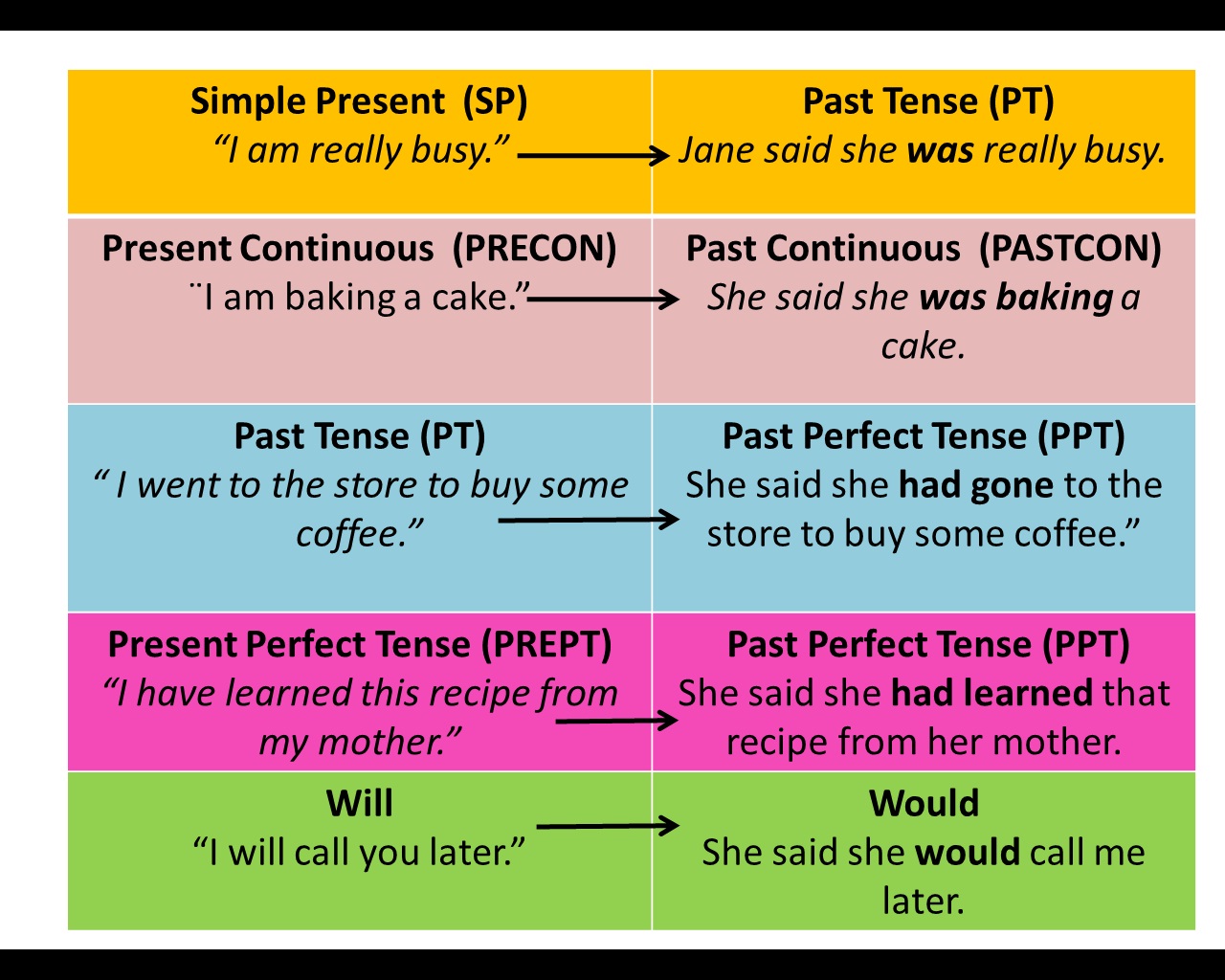
Reported speech


First click on the following link, read the explanation and analyse the tables:


Explanation


Now it's time to practise! Try the following exercises about Reported Speech:


Say and Tell Exercise

Reported speech: choose the correct answer

Reported speech exercises

More exercises


Work hard!


Wednesday, 11 October 2017

Past Continuous vs past simple


The Past Continuous


Form:

This tense is formed using two components: the verb BE (in the past tense)

and the -ING form of a verb.


Here are the rules, using the example verb "sing":


Subject BE
-ING Form
I was singing
You were singing
He was singing
She was singing
It was singing
We were singing
They were singing

We use the Past Continuous:

a) for actions that were going on at a specific time in the past:
    Sally and Tim were playing football at 6 pm.

b) for two activities that were happening at the same time in the past:
    While I was studying English, my little brother was chasing the cat.


Past continuous or past simple?


 An action that was going on in the past when another action ocurred:


Now try some exercises, using the PAST CONTINUOUS or the PAST SIMPLE!

Exercise 1 : choose the right one


Exercise 2: Write the correct verbal form

Good work!

Friday, 6 May 2016

Comparatives and superlatives

You are going to have your English test very soon. Why don't you try these revision exercises about the degrees of adjectives?

First read the explanation and then try the 1st exercise. Good work and have fun!

Explanation

Exercise 1

Exercise 2

Exercise 3

Thursday, 4 February 2016

Linking words: although, despite, in spite of, however

In spite of, despite,although and though are all used to show a contrast but there are some differences:


In spite of / despite

After in spite of and despite we use a noun or a pronoun.
  • We enjoyed our summer holiday in spite of the rain.
  • Despite the pain in his leg he went to work
  • Despite having all the right qualifications, they didn’t give me the job.
Although

After although we use a subject and a verb.
  • We enjoyed our holidays in Paris although it rained every day.
  • Although Sally studied very hard, she didn’t manage to pass the exam.
  • The holiday was great although the hotel food was tasteless
Even though

Even though is a slightly stronger form of although.
  • They decided to buy the flat even though they didn’t really have enough money.
  • You keep making that noise even though I’ve asked you to stop three times!
Like although, even though is followed by a subject and a verb.
Now let's practise!

Cause and effect linking words

There are several linking words for cause and effect, such as: because, so, therefore, as, since.


Take a look at this review lesson:
Review lesson: linking words

and then try this online exercise:
Linking words exercise: choose the right option


Good work!

Friday, 27 November 2015

Passive voice


1. Introducing the Passive

Active voice:  People drink coca cola in many parts of the world.

Passive voice: Coca cola is drunk by people in many parts of the world.


The first sentence is considered active because the doer of the action (or agent) is the subject of the sentence.

The other sentence is passive. That is, the object of the active verb (drink) in the first sentence is the subject of the passive verb (is drunk) in the second sentence.


2. Using the Passive

There are situations when it is better to use a passive sentence instead of an active one.

Situation One: When we don't care or don't know who performs the action.
ex. The injured workers were taken to the hospital.


Situation Two: When we can't or don't want to say who performed the action.
ex. The truth was hidden from us.

Situation Three: When we want to place emphasis on the receiver of the action rather than the doer, or agent.
ex. Thousands of homes were destroyed by the tornado.


3. Forming the Passive

We form the passive by using the correct form of the verbs “be”  plus a past participle.

The majority of passive sentences do not include “by phrases" because most of the times writers don't know or don't care who actually performed the action. Only when it is important for readers to know who performs the actions, do writers include it in passive sentences. 

ex.King Lear was written by William Shakespeare.
(The “by phrase” is included because it is important.)

Now let's try some exercises!

Exercise 1

Exercise 2

Exercise 3

Exercise 4

Good work!
Friday, 14 March 2014

Adjectives ending in -ed and -ing

'-ed' adjectives
Adjectives that end in -ed are used to describe how people feel:

'He was surprised to find that he had won the competition.'
'I was confused by the findings of the report.'
'She felt tired after the lesson.'

'-ing' adjectives
Adjectives that end in -ing are used to describe things and situations:

"Winning the competition is surprising."
"The findings of this report are confusing."
"The lesson is tiring."


Exercises:

1. Completing sentences

2. Writing the correct adjective

Good work!!!

The Present Perfect vs. the Simple Past

Thursday, 13 March 2014

Present Perfect in songs

Present Perfect

FORM:

This tense is formed using two components:
 the verb HAVE (in the present tense) and the past participle form of a verb.

With a regular verb the past participle ends with -ED (just like the simple past).
 Irregular verbs have a special past participle form that you have to learn.

Exercise 1: choosing the correcty verb form

Exercise 2 : changing sentences to the Present Perfect


USES:

1. Actions which started in the past and are still continuing .

He has lived in Canada for five years.
(He started living in Canada five years ago, and he's still living there now.)

She has worked at the University since 1994.
(She started working at the University in 1994, and she's still working there now.)

2. Actions which happened at some unknown time in the past

Sometimes, it's important to say that something happened (or didn't happen), but it's not important (or not known) when it happened.
 In this case, we often use the words already, yet, ever or never along with the present perfect.

I've already seen that film. I don't want to see it again.
(It doesn't matter when I saw it.)

Have you ever been to Germany?
(It doesn't matter when you went — I just want to know whether you have been there or not.)

3. Actions which happened in the past, but have an effect in the present

 In this case, the action happened at some time in the past, but the effect of the action is still important now.
SentenceMeaning
  I've lost my keys.                    I don't have the keys. They are still missing

 Exercise: Present Perfect with for or since

Present Perfect or Simple Past?


Exercise 3: Making questions


Sunday, 21 April 2013

Present Perfect Continuous

1. We use the Present Perfect Continuous when we want to emphasize how an action that started in the past has continued without stopping until now and is still taking place.

ex. I have been waiting for you for 2 hours!


2. We use the Present Perfect Continuous for an action that happened in the recent past (a short time ago), and we can see the result of that action now in the present.


ex. She's so tired! She has been studying Maths since 2 pm!


Now let's practise! Try some exercises!


Write the Present Perfect Continuous


Good work!

Thursday, 25 October 2012

The future with going to

When do we use the future with going to?

We say something is going to happen when it has already been planned.
For example:-
Q) Are you going to fly to France?
A) No, we're going to drive.

We also use it to show something has already been decided.
For example:-
"We're going to buy a new car next year."

We also use going to when we can see something is about to happen.
For example:-
 "Look at that cloud. I think it's going to rain."
 "Watch out! He's going to crash into that tree!"

You can also use going to to predict the future based upon the evidence now.
For example:-
"They are playing so well! It looks as though they are going to win the European cup."


Now try some exercises:

Exercise 1

Exercise 2

Exercise 3

Good work!

Simple Present

Hello everybody!

Here you have some exercises to practise the Simple Present:

Simple Present 1

Simple Present 2

Negative sentences

Yes/ No questions

Wh-questions


Good work and have fun!

Monday, 24 September 2012

Monday, 4 June 2012

Linking words

Linking words (or connectors or conjunctions) join two parts of a sentence.

Take a look at these examples and then try this exercise:


ConjunctionFunctionExample
and
joins two similar ideas together
He lives in London, and he studies at university.
but
joins two contrasting ideas Tom is American, but Ana is Portuguese.
or
joins two alternative ideas I could cook dinner, or we could go to a restaurant.
so
shows that the second idea is the result of the first He was ill, so he went to the doctor.

Wednesday, 18 January 2012

Indefinite pronouns


Try this exercise and practise the use of the indefinite pronouns:


Friday, 14 October 2011

Question tags

You speak English, don't you?

A tag question is a special construction in English. It is a statement followed by a mini-question. The whole sentence is a "tag question", and the mini-question at the end is called a "question tag".


A "tag" is something small that we add to something larger. For example, the little piece of cloth added to a shirt showing size or washing instructions is a tag.We use tag questions at the end of statements to ask for confirmation. They mean something like: "Am I right?" or "Do you agree?" They are very common in English.


Now try the following activities!


Exercise 1


Exercise 2


Good work!